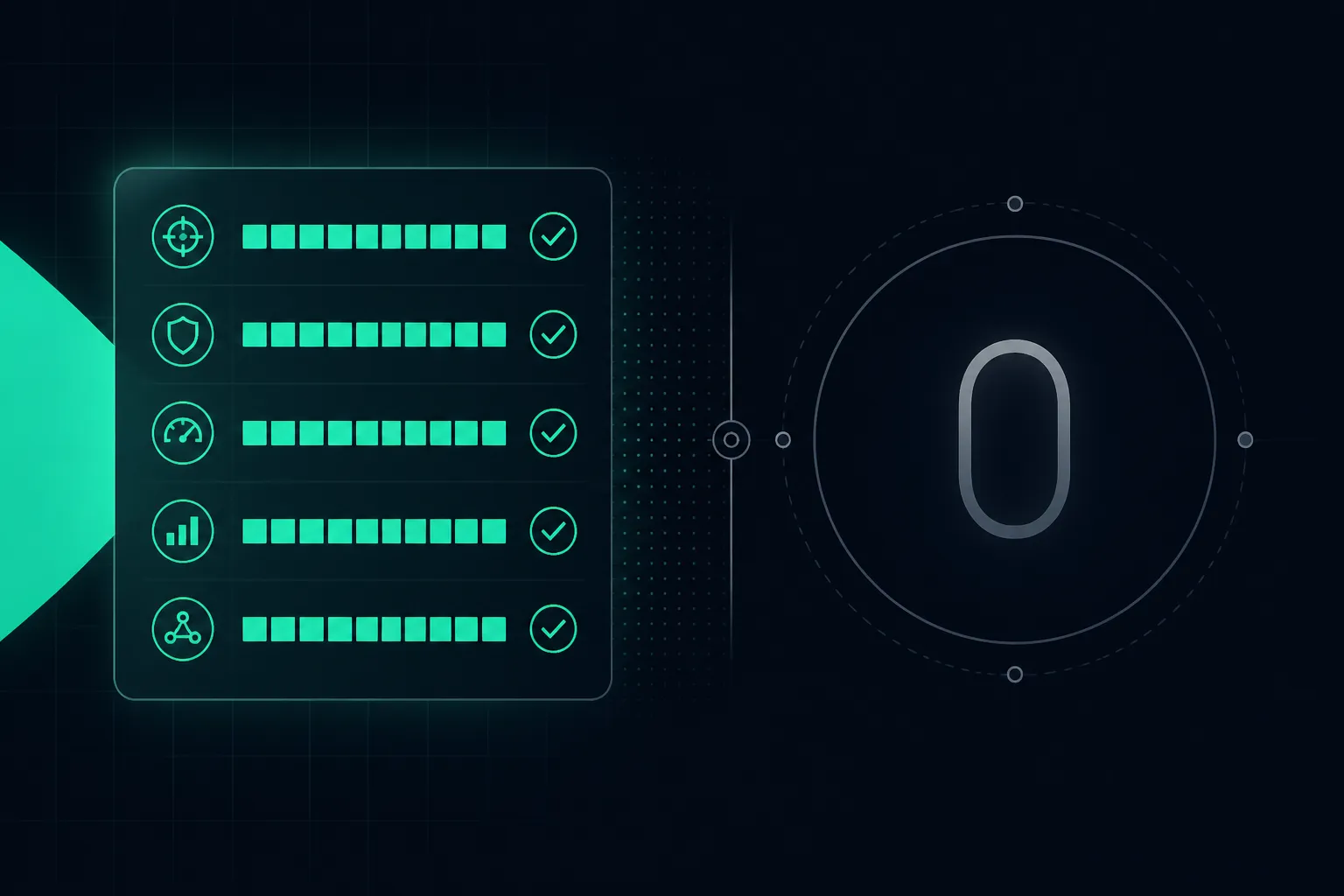
A site scoring 92/100 on technical GEO readiness earned zero AI citations in our controlled tests, while a technically messy competitor was cited every single time: technical excellence does not earn AI citations. It only stops you from being excluded.
The experiment that taught us
In one of our controlled comparisons, we tested the same set of real customer questions against AI engines and watched which local businesses got cited.
One site had everything the checklists recommend: four types of JSON-LD structured data, hreflang tags across three languages, llms.txt, even an agent-readable description file. It scored 92/100 on technical readiness. Across our test questions, it was cited zero times.
The site that won — cited in three out of three runs — had no structured data at all, no hreflang, and a visible "coming soon on Google Play" placeholder on its homepage. What it did have: pages that plainly stated what the business does, where it operates, and concrete numbers a reader (human or machine) could lift straight into an answer.
Why this happens
An AI engine composing an answer is doing something closer to quoting than ranking. It needs sentences that already look like answers:
- "X is a [category] serving [area], with [number] of [something checkable]."
- A price. A coverage figure. A response time. Years in operation.
Structured data helps the engine parse you. It does not give the engine anything to say about you. If your pages contain no liftable statements, there is nothing to cite — no matter how clean the markup is.
So is technical work pointless?
No — it's a threshold. If AI crawlers are blocked in robots.txt, if your pages render blank without JavaScript, if your title is a slogan with no category noun, engines may never read you well enough to consider you at all. Technical readiness clears the path. That's why we still audit it on every project, and fix it first.
But once the path is clear, the ordering flips: content signals decide. In our audit framework, the content-layer checks — an answer-shaped meta description, hard numbers above the fold, a real corpus of pages beyond the homepage — outrank every technical item, because that is what our test data shows actually correlates with being quoted.
What to do with this
- Fix technical blockers once, quickly, and stop polishing them.
- Rewrite your homepage's first screen so that a stranger could read two sentences and repeat back what you do, where, and one number that proves scale.
- Build real pages: guides, service pages, honest FAQs. An engine deciding whether to trust you looks for evidence beyond a single well-decorated homepage.
We say this as a company that sells technical fixes too: don't buy — or build — the markup and stop there. The markup is the doorway. The content is the reason anyone walks through it.